Equine Chiropractic
Helping your horse move comfortably, confidently and perform at their best.
Whether you're preparing for competition, supporting recovery after injury or you've simply noticed that your horse isn't moving quite as freely as they used to, gentle McTimoney Veterinary Chiropractic can help restore comfort, improve mobility and support long-term wellbeing.
Is your horse trying to tell you something?
Horses are incredibly good at adapting to discomfort.
Often, the earliest signs are subtle and easy to overlook.
A slight reluctance to work, changes in behaviour or small differences in the way they move can all indicate that something isn't quite right.
You know your horse better than anyone. If you've noticed a change, it's always worth investigating.
Common reasons owners contact me include:
Reluctance to work or perform
Changes in behaviour under saddle
Reduced flexibility or stiffness
Uneven movement
Difficulty striking off on one canter lead
Resistance in transitions
Poor performance
Rehabilitation following injury
Recovery after veterinary treatment
Routine maintenance checks for competition horses
Supporting older horses to stay comfortable
A Gentle Approach to Chiropractic Care
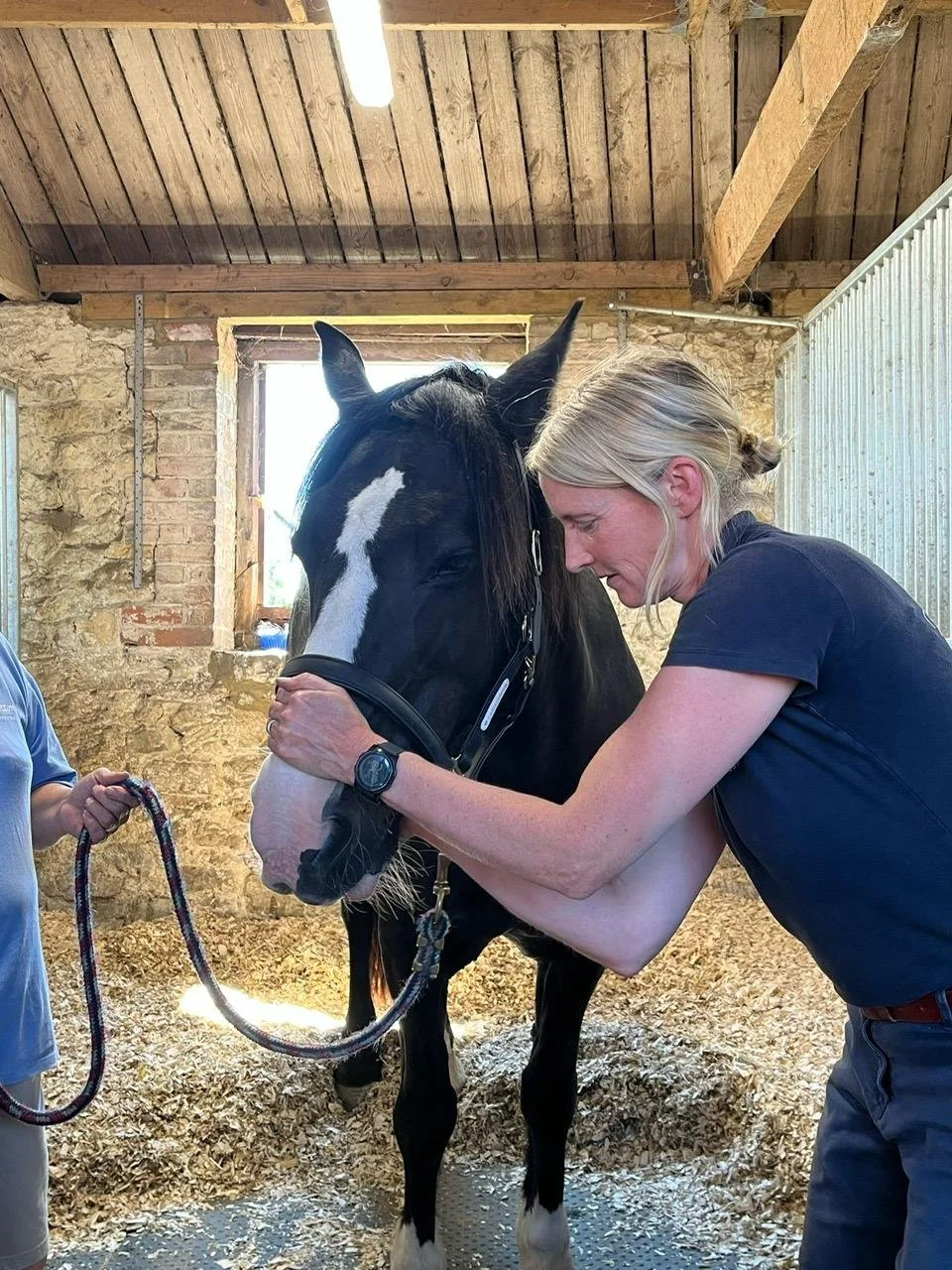
McTimoney Veterinary Chiropractic is a gentle, hands-on therapy that uses small, precise adjustments to restore normal movement within the joints and musculoskeletal system.
Unlike some chiropractic techniques people may have seen, McTimoney adjustments don't rely on forceful manipulation. Instead, I use carefully controlled movements with my hands to encourage the body to move more freely and comfortably.
Most horses remain relaxed throughout treatment, often showing signs of release such as yawning, stretching or becoming visibly more settled as tension is released.
Every treatment is adapted to the individual horse, taking into account their age, workload, history and temperament.
Looking Beyond the Symptoms
No two horses are the same.
That's why every appointment begins with understanding the bigger picture.
I consider:
Your horse's movement
Previous injuries
Veterinary history
Current workload
Saddle and ridden concerns
Behavioural changes
Competition goals
Management and lifestyle
Rather than simply treating where discomfort appears, I look for the underlying cause so treatment can support long-term improvement rather than short-term relief.
Whether your horse is competing at a high level or simply enjoys hacking through the countryside, they deserve to move comfortably.
Rehabilitation and Performance Support
Chiropractic care isn't only about addressing problems once they've developed.
Many owners choose regular maintenance appointments to help keep their horses comfortable throughout the year.
Regular assessments can help:
Maintain freedom of movement
Support performance
Reduce muscular tension
Identify small issues before they become larger problems
Assist recovery after competitions
Support rehabilitation following injury
Keep older horses comfortable and active
Whether your horse competes every weekend or simply enjoys life in the field, regular treatment can play an important role in supporting their long-term wellbeing.
-
Chiropractic is a treatment that consists of spinal adjustments carried out by the hands of the practitioner. It is a safe,non-invasive therapy that works to realign and balance the animal’s musculoskeletal system, restoring health and movement, soundness and performance. John McTimoney developed this approach in the 1950s, modifying the human adjusting technique to apply specifically to animals.
-
Appointments usually last up to 45 minutes for dogs and up to 1 hour for horses, but this will vary depending on each individual animal and the nature of the problem.
-
Your animal will need to have been exercised before the appointment, as it is most likely that they will need some quiet time post treatment. Horses need to be brushed off and dry, so this may mean getting them in from the field in time for them to dry off. To evaluate the animal’s way of moving I need to have an area where we can walk and trot the animal (usually on the yard for horses and down a pavement or hall for dogs) and there needs to be a flat area for me to treat on.
-
Firstly, we will discuss your animal, and I will take down a detailed history. I will then watch them being led in walk and trot on a straight line and in small circles. The gait analysis is followed by palpation (where I feel over the animal for any pain or tension) and then I carry out any adjustments that are needed. I then work on releasing any tension that is still present before running through aftercare advice.
-
Yes, I will need someone there to walk and trot up the horse or dog and then someone to hold them whilst I am carrying out the adjustments. I will give the handler instructions on where to stand as a work around the animal.
-
McTimoney chiropractic has been developed for young, old and nervous animals alike and is a safe effective treatment for all animals. Most animals are relaxed and happy to receive the adjustments and often show signs of release and relaxation.
-
LASER stands for Light Amplification by Stimulated Emission of Radiation. It's a non-invasive treatment that uses light to stimulate the body's cells and help them repair. The light is absorbed by the cells, which boosts the mitochondria (the cell's powerhouse) so they can produce more energy for healing. It also helps reduce inflammation, calms sensitive nerves so the area becomes less painful, and encourages better circulation — meaning more oxygen and nutrients reach the tissue to help it heal faster.
-
SCENAR stands for Self-Controlled Energy Neuro-Adaptive Regulation. It's a gentle, non-invasive electrotherapy that uses small electrical signals applied to the skin to stimulate the body's nervous system responses. It's used with animals to support muscle relaxation, increase circulation, and provide pain relief.
-
Yes — both can be used alongside chiropractic treatment to support recovery. Laser therapy is often used to help reduce pain, ease inflammation and support tissue healing, while SCENAR is used to encourage muscle relaxation, improve circulation and provide pain relief. Every treatment is tailored to your animal's individual needs and may be incorporated into an appointment where appropriate.
-
Yes. Both are safe, comfortable and non-invasive treatments, with no needles or medication involved.
-
Most animals tolerate both treatments extremely well. With SCENAR, your horse or dog may notice a gentle tingling sensation, though many animals appear completely relaxed throughout. Laser therapy is typically felt as a mild, soothing warmth. Both treatments are adjusted to suit each individual animal, so the experience stays gentle and comfortable.
-
Every animal responds differently, so the number of treatments required will depend on the condition being treated, how long it has been present and your animal's individual response.
Following an assessment, I'll discuss my recommendations and, where appropriate, suggest a treatment plan tailored to your horse or dog's needs.
-
Most horses will need the day off after the treatment and dogs will need to be on short, controlled walks for a few days to allow the body to adjust to it’s new alignment, before carrying on with normal work/exercise. I will also give aftercare advice including exercises and/or massage to carry out between appointments, to help keep the animal as soft and supple as possible.
Frequently Asked Questions
Give your horse the freedom to move comfortably again.
Whether you're concerned about a recent change in movement, looking to support rehabilitation or simply want to keep your horse performing at their best, I would be delighted to help.